top of page

Why build maglev trains?

Advantages of Maglev Trains Compared to High-Speed ​​Rail
Institute of Electrical Engineering, Chinese Academy of Sciences
Speed ​​and Efficiency: Faster operating speeds enable shorter passenger travel times (e.g., holding the land speed record of over 574.8 km/h).
High Operational Capability: Possesses superior climbing ability (gradients up to 10%), allowing it to adapt to mountainous terrain.
Low Noise: The absence of wheel-rail friction results in quieter operation.
Low Maintenance: The lack of mechanical contact reduces mechanical wear and tear.
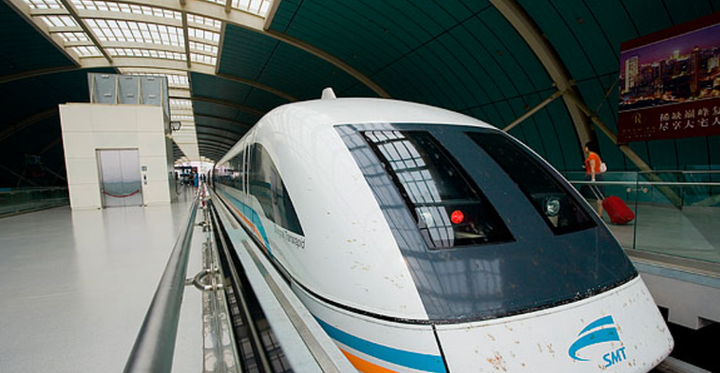
截屏2026-03-20 下午2.42.14.png

What is maglev train

A maglev (magnetic levitation) train is a high-speed transportation system that uses powerful electromagnets to lift, guide, and propel carriages above a guideway rather than on steel wheels. By eliminating friction and physical contact with tracks, maglev trains travel smoother, quieter, and faster, often exceeding ().

Key Features and TechnologyLevitation and Propulsion: The train floats several inches above the guide rail. Magnetic fields are generated by electrically charged coils in the guideway walls, creating both lifting force and forward propulsion.No Wheels or Engines: Because they do not rely on friction between wheels and rails to move, maglevs are more efficient at high speeds, avoiding the "wheel slip" seen in conventional trains.Key Types:Electromagnetic Suspension (EMS): Electronically controlled magnets on the train attract it to the underside of a ferromagnetic rail.Electrodynamic Suspension (EDS): Uses superconducting magnets that create a repulsive force to lift the train away from the rail.Operational Systems: Currently used in countries like China, Japan, and South Korea, with Japan holding the record speed of ()

截屏2026-03-24 下午1.18.33.png
bottom of page